
Your dog probably climbs the stairs in your home several times a day, without you giving it a second thought. But for small, long-backed, or aging dogs, that daily habit can be quietly stacking up spinal stress with every step.
What IVDD Actually Is
Intervertebral Disc Disease (IVDD) happens when one of the cushioning discs between a dog's vertebrae bulges or ruptures, putting pressure on the spinal cord. It's one of the most common orthopedic conditions in small and long-backed breeds. Dachshunds, Corgis, Basset Hounds, Shih Tzus, and Beagles are especially prone to it because of how their body shape distributes weight along the spine.
Vets often point to jumping on and off furniture as the obvious culprit. But stairs deserve just as much attention, because unlike an occasional leap onto the couch, stairs are a repeated, daily motion. Every step involves a small twist and jolt through the back, and for a dog with a long spine or short legs, that adds up over months and years.
Why Stairs Specifically Are a Problem
A few things make ordinary household stairs riskier than owners realize:
- Hard, slick surfaces. Hardwood, tile, and painted steps offer little grip, so a dog's paws can slide mid-stride, forcing an awkward correction through the spine.
- Step height mismatch. Standard stairs are built for human strides, not a dog with 4-inch legs. Small dogs often have to stretch or hop between steps rather than walk them normally.
- Repetition. A single jump off a bed is one event. Stairs climbed multiple times a day, every day, for years, is cumulative stress on the same joints and discs.
- No consistent footing cues. Dogs without a predictable grip pattern tend to rush or misjudge steps, especially older dogs with declining vision or confidence.
Signs Your Dog May Already Be Struggling
Watch for hesitation before climbing, a hunched or tucked posture on stairs, reluctance to go up or down at all, yelping on specific steps, or favoring one side. These can be early signs of discomfort, not just "stubbornness."
Making Stairs Safer Without Blocking Them
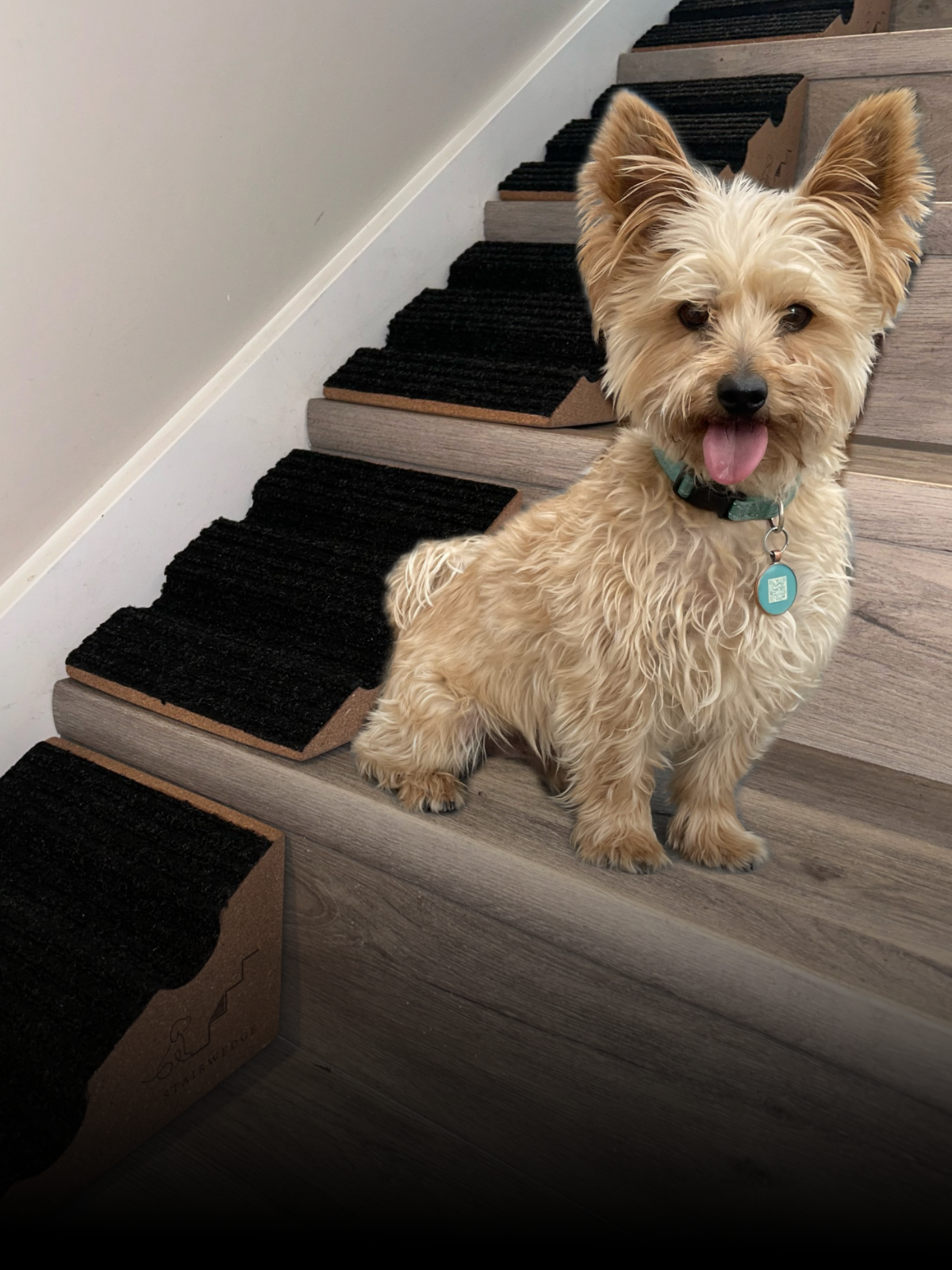
Gates keep dogs off stairs entirely, which isn't always practical if the stairs are the only way to a favorite room or the yard. The better fix is adding secure, non-slip traction directly to the steps your dog already uses, so the natural climbing motion becomes safer instead of removing it altogether.
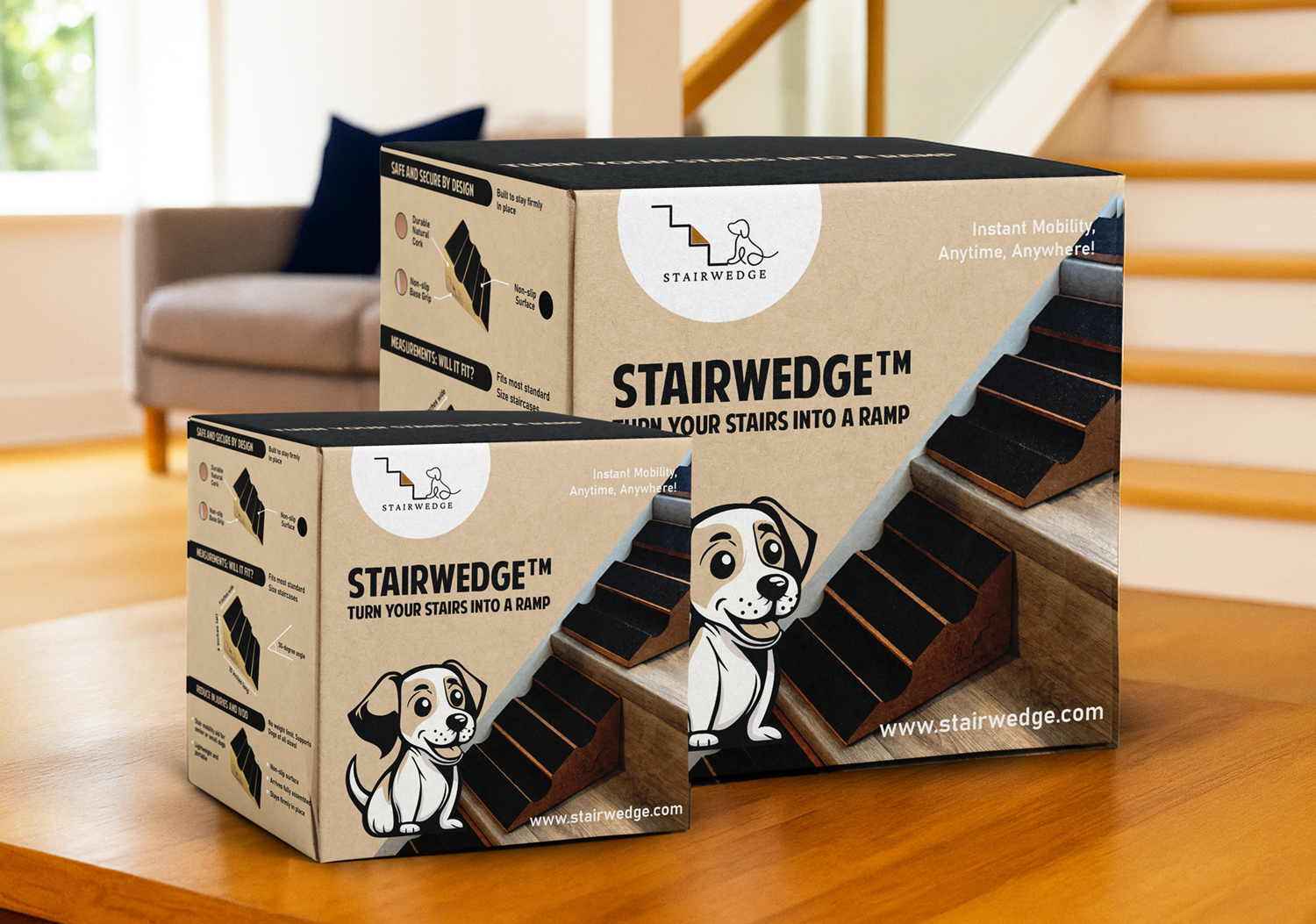
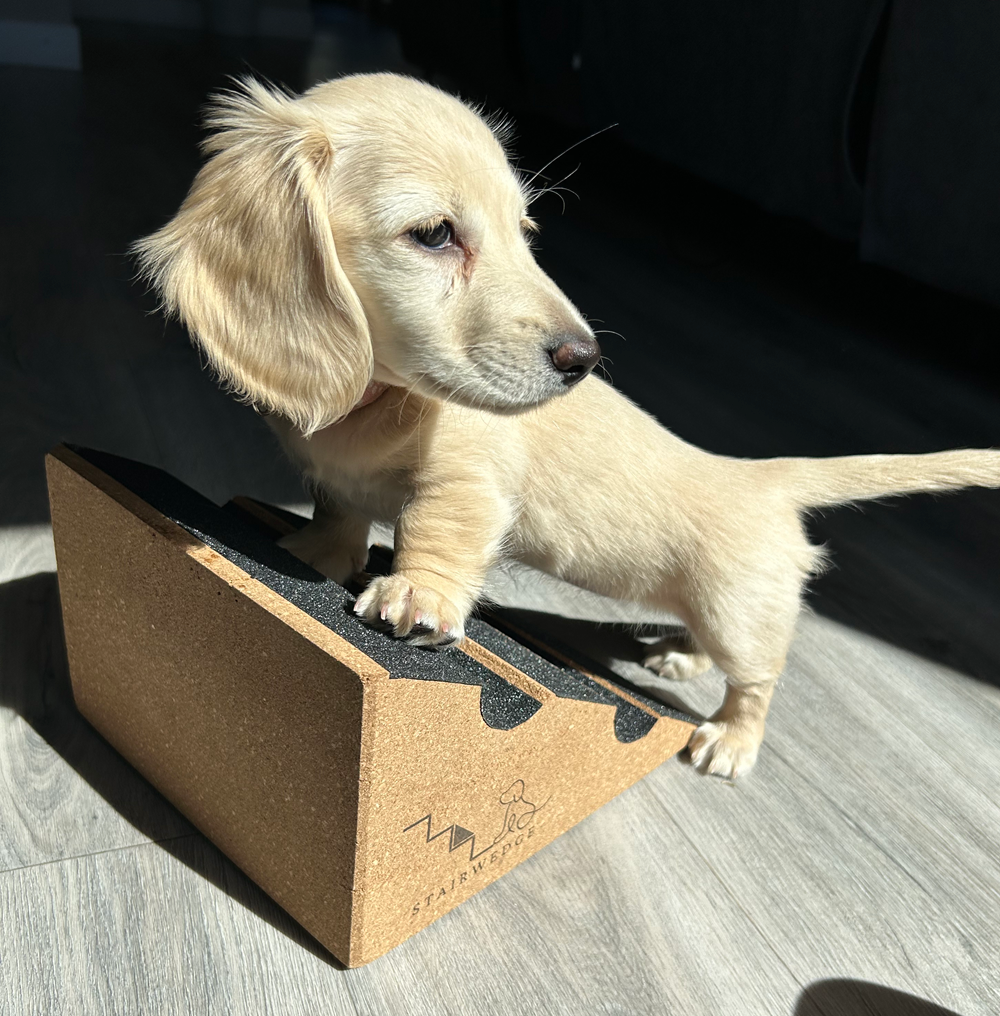
That's the idea behind StairWedge™ — a simple wedge that installs directly onto your existing staircase to give dogs a stable, grooved surface to grip with every step, reducing the slipping and jarring that puts stress on the spine. It's designed specifically for the stairs themselves, rather than replacing them with a separate ramp.
If your dog is a breed prone to IVDD, getting older, or you've noticed any hesitation on the stairs, it's worth taking a closer look at what's actually happening under their paws with every step.

Leave a comment
This site is protected by hCaptcha and the hCaptcha Privacy Policy and Terms of Service apply.